Building Psychological Safety and Psychosocial Wellbeing at Work

Building Psychological Wellbeing and Psychosocial Safety at Work
Neurodivergent employees, including people with dyslexia, ADHD, autism, and other learning differences, can be at higher risk of exposure to psychosocial hazards when workplaces are not designed with neurodiversity in mind. Common risks include cognitive overload, unclear communication, rigid systems, sensory stress, and lack of appropriate support or adjustments.
What Does Psychological Safety Look Like?
Psychological safety is about how safe a neurodivergent employee feels to be themselves at work.
In a psychologically safe workplace, a neurodivergent employee may feel able to:
- ask questions or ask for help without fear of judgment about their neurodivergent condition/ difference
- speak up if something isn’t working for them
- make mistakes and learn from them
- share ideas or different ways of doing things
- feel safe to share that they are neurodivergent
- ask for workplace adjustments or support
When psychological safety is present, people feel respected, listened to, and supported by others at work.
What Are Psychosocial Hazards?
Psychosocial hazards are parts of work that can negatively affect your mental health or well-being over time.
For neurodivergent employees, psychosocial hazards can include:
- heavy or unrealistic workloads
- unclear instructions or changing expectations
- noisy, busy, or overstimulating environments
- rigid systems that don’t support different working styles
- being misunderstood or not believed
- stigma or lack of awareness about neurodivergence
- lack of staff training and awareness
- difficulty accessing reasonable adjustments, such as AI tools, such as text-to-speech or speech-to-text software
- not having enough time, breaks, or flexibility
When these hazards aren’t addressed, they can negatively impact psychological well-being, leading to stress, exhaustion, anxiety, or burnout.
What Can Help Employers Create Safer Workplaces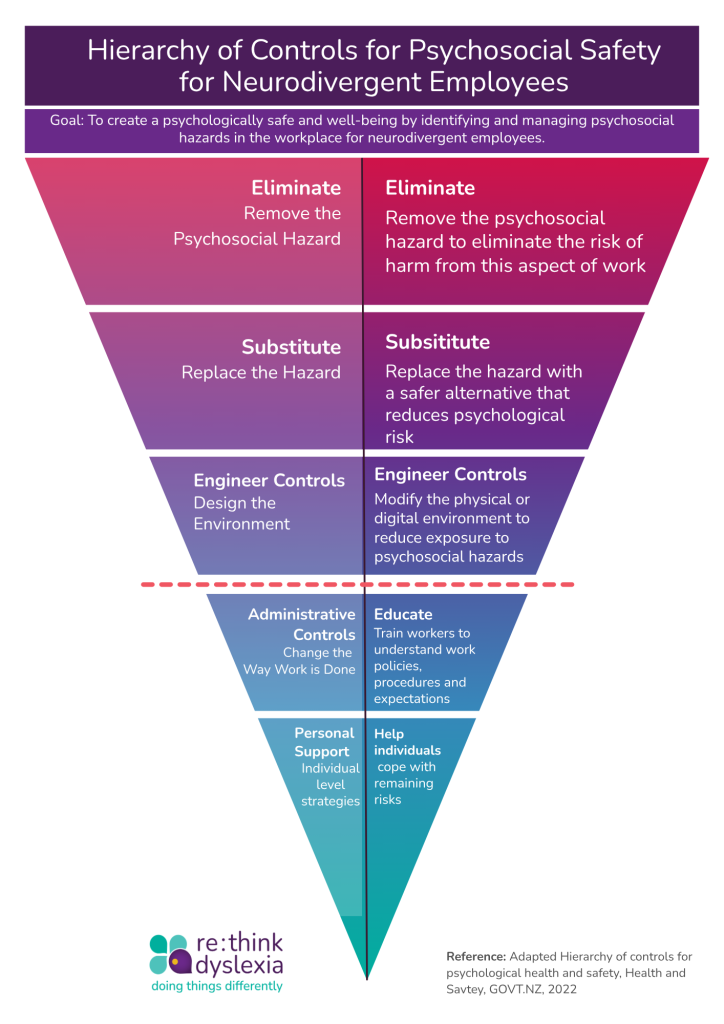
Supporting psychological safety and psychosocial well-being is part of creating safe systems of work. While needs will differ across roles and individuals, effective risk controls often include:
-
- clear, consistent processes for identifying, requesting, and implementing workplace adjustments
- flexible work arrangements, including hours, breaks, or hybrid options where reasonably practicable
- access to assistive technology to reduce cognitive load and support reading, writing, planning, focus, or communication
- clear, direct, and accessible communication to reduce misunderstanding and role ambiguity
- realistic workloads and timeframes, particularly during periods of change, onboarding, or high demand
- supportive, respectful conversations between managers and employees
- access to peer support, mentoring, or external workplace support services where appropriate
These measures act as protective factors, helping to reduce psychosocial risk and support employees to work safely, sustainably, and productively.
Need Support or Not Sure Where to Start?
Many organisations recognise their responsibility to manage psychosocial risks but are unsure how to assess hazards or implement effective controls, particularly for neurodivergent employees.
re:think dyslexia supports employers to identify psychosocial hazards, strengthen protective factors, and build psychologically safe workplaces. We work with leaders, HR, and WHS teams to provide practical guidance, training, and workplace support grounded in lived experience and evidence‑based practice.
👉 Contact us to discuss how we can support your organisation, or speak with one of our workplace consultants.